
Clean. Safe. Sustainable. The Future of UVC Disinfection
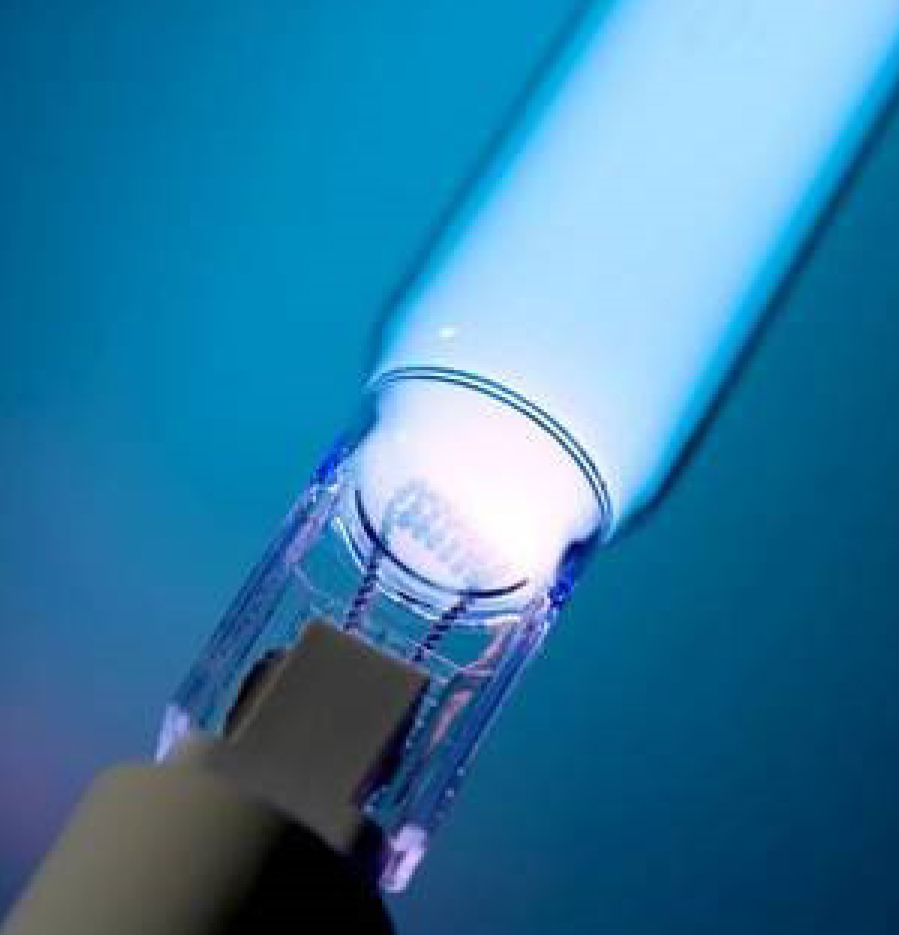
UVC disinfection is a proven, chemical-free technology for the reliable inactivation of microorganisms in water, air, and on surfaces. This White Paper explains how UVC radiation works, the key factors to consider when selecting the right UV lamps, and which lamp technologies are best suited to different industrial applications. Discover solutions that improve hygiene, enhance process reliability, and support greater sustainability.
Effective UVC Technology
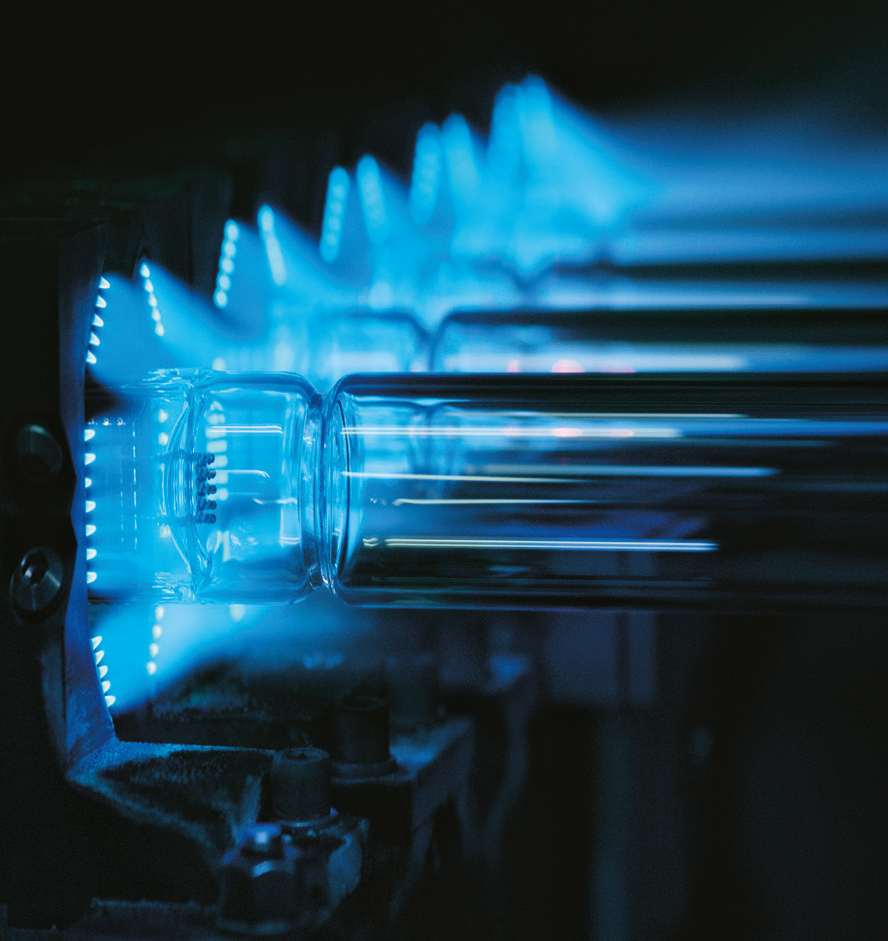
High-intensity UVC irradiation enables the rapid and highly effective inactivation of microorganisms in water, air, and on surfaces. As a chemical-free disinfection technology, it helps improve hygiene standards, extend product shelf life, and enhance process reliability across a wide range of industrial applications.
[Image caption: A High-Output Out-of-Arc Low-Pressure Lamps (800/1000 W) for Water Disinfection]
What Do Different Wavelengths Do?
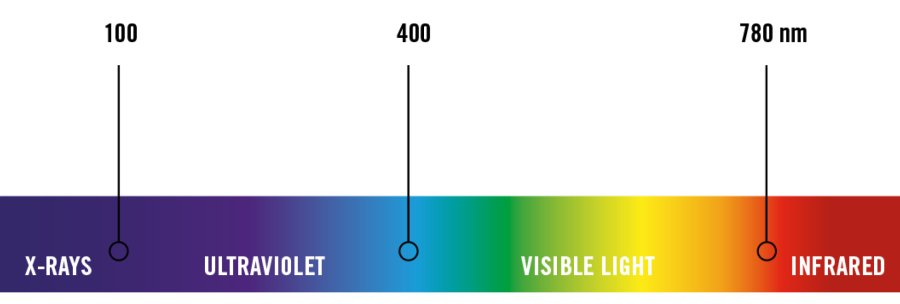
Ultraviolet radiation can be divided into several groups, each with different biological effects and technical applications.
- VUV, in the wavelength range of 100–200 nm, generates ozone, which is often used to reduce pollutants in the air.
- UVC is invisible. It consists of electromagnetic waves in a spectrum ranging from 200–280 nm. UVC radiation has the highest bactericidal/disinfecting effect at 254 nm.
- UVA and UVB are used, for example, to cure surfaces.
How Do you Find the Right Emitter for your Process Environment?
The following criteria always need to be considered:
- The time available for microbial inactivation
- Energy consumption
- The required wavelength range
- Initial investment costs
- Emitter size and compactness
- The efficiency and the UV output
How Does UVC Disinfection Work?
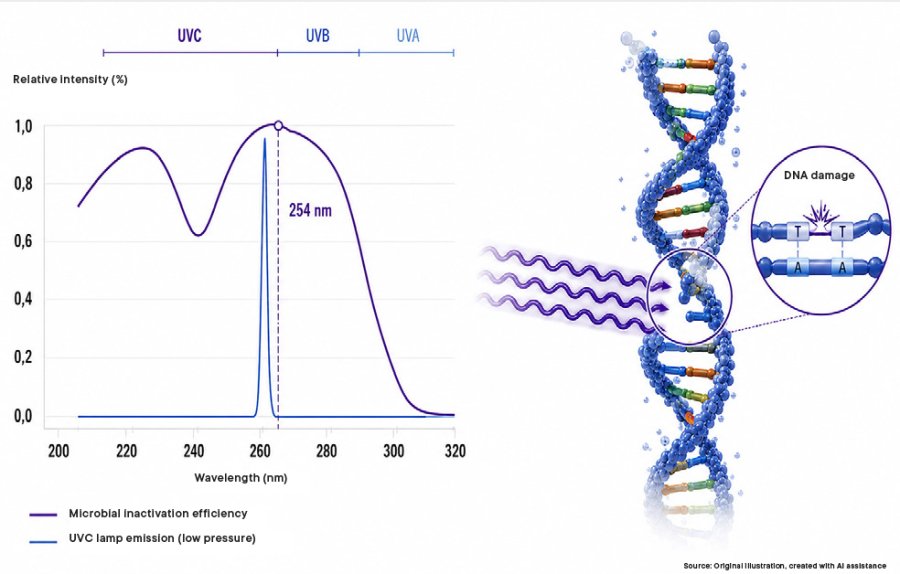
The emitted UVC radiation has a powerful germicidal effect. It is absorbed by the DNA of microorganisms, disrupting its molecular structure and rendering the cells inactive. Microorganisms such as viruses, bacteria, yeasts, and fungi can be effectively inactivated by UVC radiation within seconds. When the irradiation intensity is sufficiently high, UVC disinfection provides a reliable and environmentally friendly method that can, in some cases, eliminate the need for chemical disinfectants. In addition, microorganisms cannot develop resistance to UV radiation.
[Image caption: Photons directly destroy the bonds within the DNA strands of viruses, bacteria, and mold spores. This disrupts their reproduction]
Various Lamp Technologies are Suitable for UVC Disinfection
UV low-pressure lamps are made of high-quality quartz glass and are used to disinfect water, air, and surfaces. When synthetic quartz glass is used as the lamp material, in addition to 254 nm, UV radiation at 185 nm (vacuum UV) is sometimes emitted, which is used for oxidation processes such as the reduction of pollutants, odours, and fats in the air or for water disinfection. In this process, a power density of 0.5–1 W/cm is achieved.
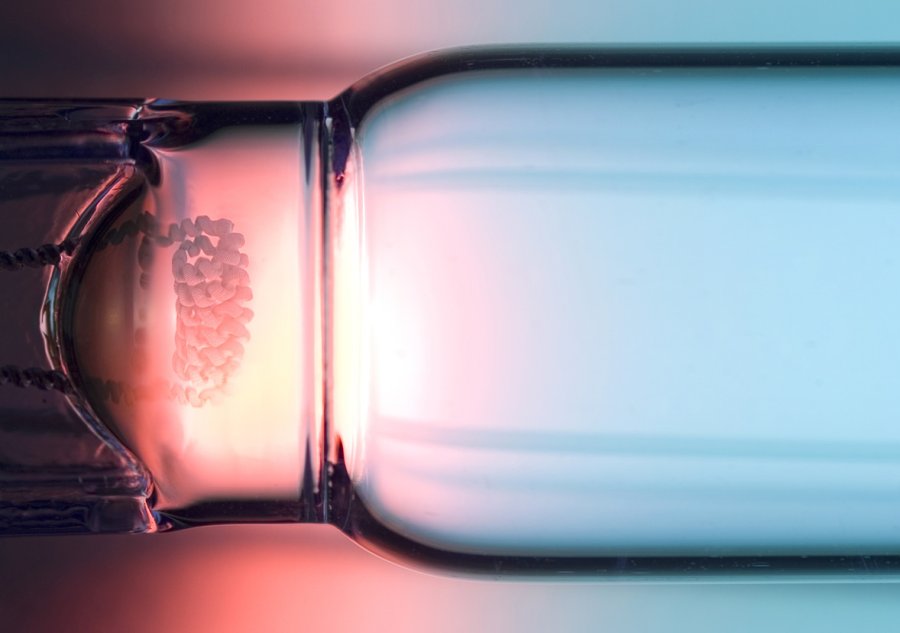
- Amalgam UV lamps offer disinfection performance that remains virtually constant throughout the lamp’s entire service life. Thanks to a special coating, the lamps deliver up to ten times higher UV power density (1.5–5 W/cm) than conventional low-pressure mercury lamps. They can be used at high ambient temperatures of up to 90 °C and are insensitive to temperature fluctuations.
-
Out-of-Arc lamps convince with high UV output, a long service life, and reliable operation. Improved efficiency means fewer lamps are needed to achieve the same output. This reduces replacement intervals and maintenance requirements and lowers total operating costs. The robust design ensures high performance (4–5 W/cm) and makes the lamps a cost-effective and sustainable solution for demanding applications.
UV medium-pressure lamps are characterized by a broad, distinct line spectrum in the ultraviolet and visible ranges (200–600 nm) as well as a high power density (80–300 W/cm).
Pulsed flash lamps are typically operated at high average power (290–690 J), with pulse durations in the millisecond range and repetition rates in the kilohertz range. The lamps offer high efficiency, high stability, and long service life. They are used as disinfection lamps in the food industry—for example, for packaging materials in high-speed (F)FS machines.
Conclusion
UVC disinfection offers a reliable, fast, and chemical-free way to inactivate microorganisms in water, air, and on surfaces. Depending on the application, various UV technologies and lamp types are available. Key factors for an optimal solution include wavelength, exposure time, power requirements, and specific process conditions. When properly designed, UV technology enables efficient, sustainable, and safe integration into industrial processes.
[Image caption: The unique coating on Amalgam UV lamps prevents discoloration and loss of transmission. This keeps UVC performance at a consistent level]
White Paper September 2026, Excelitas
AUTHORS
Lisa Würke, Product Marketing Specialist
Wiebke Rustler, Product Marketing Specialist